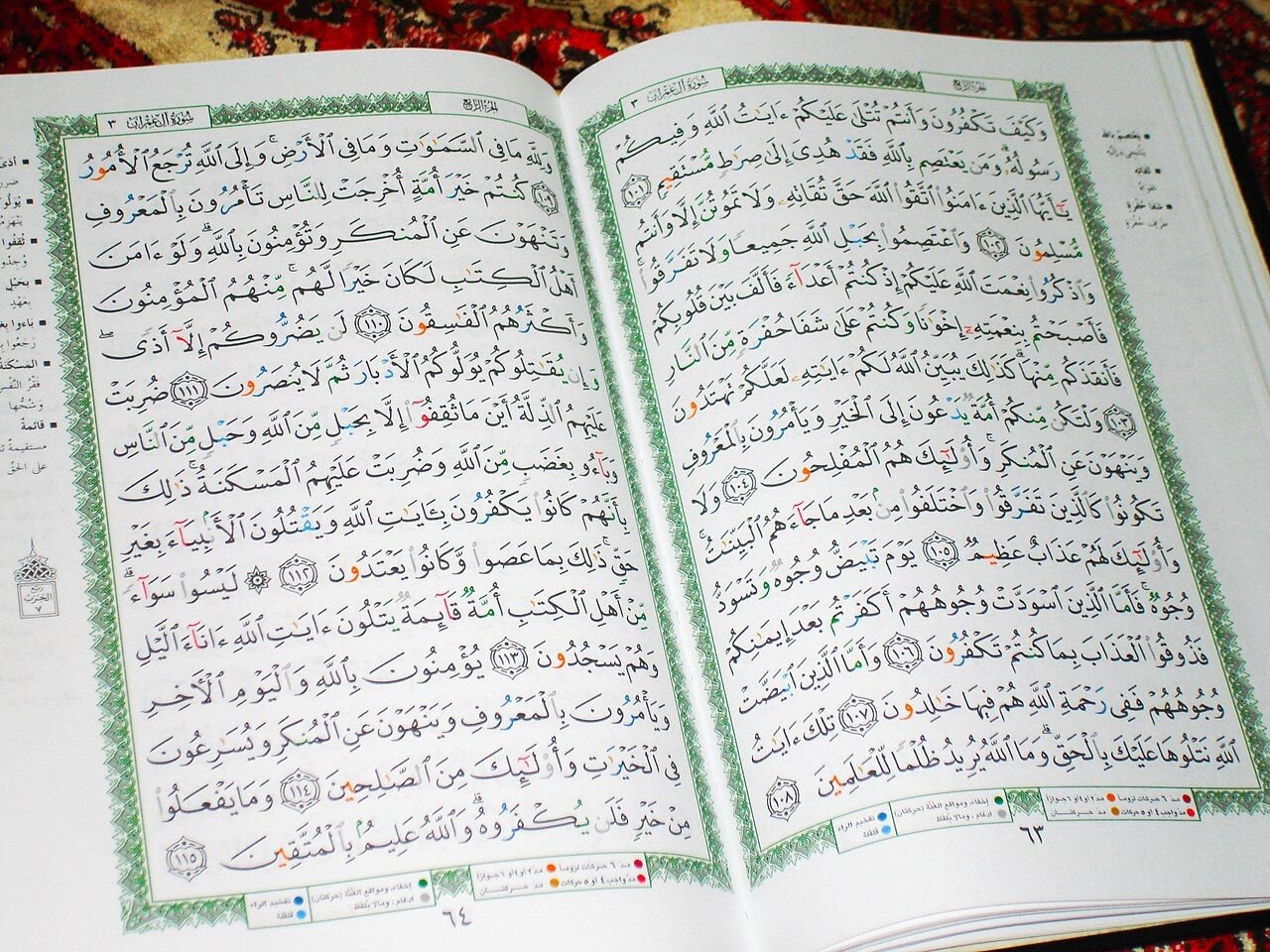
What is the difference between translation, transliteration and tafsir?
A translation helps a reader access meaning in another language; it remains a human interpretation rather than the Arabic Quran itself. Transliteration changes the writing system used to represent sounds. Tafsir provides explanation. Egypt’s Dar al-Ifta describes Quranic interpretation as a field requiring language, context and other relevant disciplines, rather than simply replacing Arabic words with English ones.
| Material | What it helps with | What it cannot establish alone |
|---|---|---|
| Arabic Quran | Reading the revealed wording | A beginner may still need teaching to understand or pronounce it |
| Translation of meaning | Understanding through another language | Every nuance or a complete legal interpretation |
| Transliteration | An approximate reading prompt in another alphabet | Precise Arabic pronunciation or the meaning |
| Tafsir | Explanation using identified methods and sources | Automatic agreement among all scholars on every question |
| Personal reflection | Recording a reader’s response and intended action | A new authoritative interpretation of the verse |
How should I choose a Quran translation?
Start with an identifiable translator or translation team and a clear publisher. Check whether the edition gives an introduction, explanatory notes and information about its approach. Read a short familiar passage to see whether its language is understandable to you. A teacher can help you choose an edition suitable for your level and learning context.
QuranEnc publishes translator or institutional names, version information and multiple language editions. That information is useful when you want to identify what you are reading. The fact that a text is online or frequently shared is not enough. Keep a stable reference to the actual edition instead of saving an unattributed quotation image.
- Who translated or prepared this edition?
- Who published it, and is a version or publication date shown?
- Are explanatory additions and footnotes distinguishable from the main translation?
- Can I return to the exact chapter and verse?
- Does a qualified teacher recommend it for my learning needs?
Why do English Quran translations use different words?
Languages do not map word for word. A translator makes choices about vocabulary, sentence structure and how explicitly to express a meaning. Dar al-Ifta notes that a translation cannot reproduce every nuance of the original. A difference may be stylistic, explanatory or interpretive; seeing two different English words does not tell you which explanation applies.
When a difference matters, record the verse and both edition names, then identify the exact phrase that changes your understanding. Read each translator’s note before deciding that the versions contradict each other. Ask a teacher to explain a significant issue. Do not settle it by counting which wording appears on more websites.
How can I study a passage with translation and tafsir?
Use a small passage and one identified translation for a first reading. Read before and after it until you can see the immediate discussion. Write down what is clear and what is uncertain. Then consult a suitable tafsir for the specific question rather than reading scattered quotations until one confirms your first impression.
This suggested routine keeps several tasks separate: locating the wording, understanding the basic meaning, asking about context and considering a practical response. Quran 38:29 connects the Book with reflection and taking heed. That invitation does not make every personal association an explanation of what the verse means.
- Locate the complete verse and read its surrounding passage.
- Read the identified translation and its notes.
- Write one precise question using the verse reference.
- Consult an identified tafsir or ask a qualified teacher.
- Record what the source explains separately from your own reflection.
- Choose a reasonable action based on what is clear, and leave unresolved questions open.
What should I check when reading tafsir online?
Look for the author, work title, translator where relevant, and whether the online text is abridged. Tafsir works have different emphases, including transmitted reports, language and legal interpretation. Dar al-Ifta’s introduction describes those differences. A short excerpt should not be assumed to represent the full discussion or every scholarly position.
Check that the commentary is attached to the verse you intended to study. If it covers a range of verses, read enough to follow that range. Keep any qualification beside the conclusion when taking notes. When sharing, name the work and link to the passage instead of presenting its explanation as an unattributed statement from the Quran.
Are word-by-word translations enough to understand a verse?
Word-by-word tools can help you notice recurring vocabulary and compare a word with its place in a sentence. They are a starting aid. The Quranic Arabic Corpus presents linguistic analysis as well as parallel translations, showing that a word belongs within a larger grammatical structure. A dictionary gloss is not automatically a complete sentence meaning.
For study notes, keep the whole verse reference beside a vocabulary item. Avoid building a new translation by selecting whichever English gloss best suits an argument. If a claim depends on grammar, a technical term or several possible meanings, take it to someone trained in the relevant language and interpretive disciplines.
How should I handle website translation and AI explanations?
A translated website menu and a published Quran translation are separate things. Changing an interface language should not cause the Arabic Quran to be rewritten. On The Deen Map, the source of the Arabic text and the translation is stated under every surah. Treat an explanatory article as editorial guidance, even when the page also contains verified Quranic text.
If you use an AI tool to help organise questions or notes, check every verse reference and attribution against the actual source. A fluent answer can combine interpretation with an unsupported claim. Do not ask a general translation tool to create a new Quran edition and then present it as verified scripture. Keep source text, published interpretation and your notes visibly separate.
What should a useful study note or correction include?
Record the chapter and verse, the edition or tafsir title, the date you consulted it and the page link. If you notice a possible error, copy only the small passage needed to identify the issue and explain what you think needs checking. Preserve the source’s wording while the question is investigated.
QuranEnc’s terms require attribution, version information and preservation of its translation content when republishing. Sacred subject matter does not remove the responsibilities attached to a modern translation or edition. Link to the source for longer passages and use its stated correction route; do not silently rewrite another translator’s work under their name.
Quran passages in this guide
Read each complete verse below in Arabic and the identified English interpretation. Follow the context link before drawing conclusions from an isolated verse.
Saad 38:29. The Quran’s invitation to reflection and taking heed, shown as a complete source-bound verse.
كِتَـٰبٌ أَنزَلْنَـٰهُ إِلَيْكَ مُبَـٰرَكٌ لِّيَدَّبَّرُوٓا۟ ءَايَـٰتِهِۦ وَلِيَتَذَكَّرَ أُو۟لُوا۟ ٱلْأَلْبَـٰبِ ٢٩
[This is] a blessed Book which We have revealed to you, [O Muhammad], that they might reflect upon its verses and that those of understanding would be reminded.
Translation: Saheeh International · Read in context
Questions readers often ask
Is a Quran translation the same as the Quran in Arabic?
A translation conveys an understanding of the Arabic meaning through another language. It is valuable for study, but remains a human work with interpretive choices and limitations, rather than replacing the Arabic text.
Which English Quran translation is the most accurate?
No brief guide can establish one edition as best for every reader and every purpose. Choose an identified, reputable edition suited to your needs, read its notes and ask a qualified teacher about significant differences.
Can I read a translation before learning Arabic?
An identified translation can help you begin understanding the meaning while you learn Arabic reading separately. Use explanatory notes and qualified teaching for questions instead of treating an English sentence as a complete tafsir.
Can I combine phrases from different translations into my own version?
For personal comparison, keep each wording attached to its translator. Do not publish a combined wording as though it were one identified edition; mixing selections hides the interpretive choices and source responsibilities.
Sources
-
Dar al-Ifta: The accuracy of the different translations of the Quran Institutional explanation
Explains limits of translation and the role of qualified study; published 25 February 2015. Practical comparison exercises here are editorial suggestions.
-
Dar al-Ifta: An Introduction to the Theory of Qur’anic Interpretation Institutional explanation
Introduces tafsir, its disciplines and different emphases of works from a Sunni institutional perspective.
-
QuranEnc: translation catalogue, source information and terms Provider documentation
Identifies translation editions and versions, states their human limitations, and sets republication terms.
-
The Quranic Arabic Corpus: translation and linguistic resources Linguistic resource
An example verse page linking parallel translations with word-level and grammatical study tools.
-
Quran 38:29 Primary text
Reflection and taking heed; the article’s study workflow is not a prescribed ritual sequence.
Qur’an Arabic: Tanzil (CC BY 3.0). English: Saheeh International (via Tanzil).